


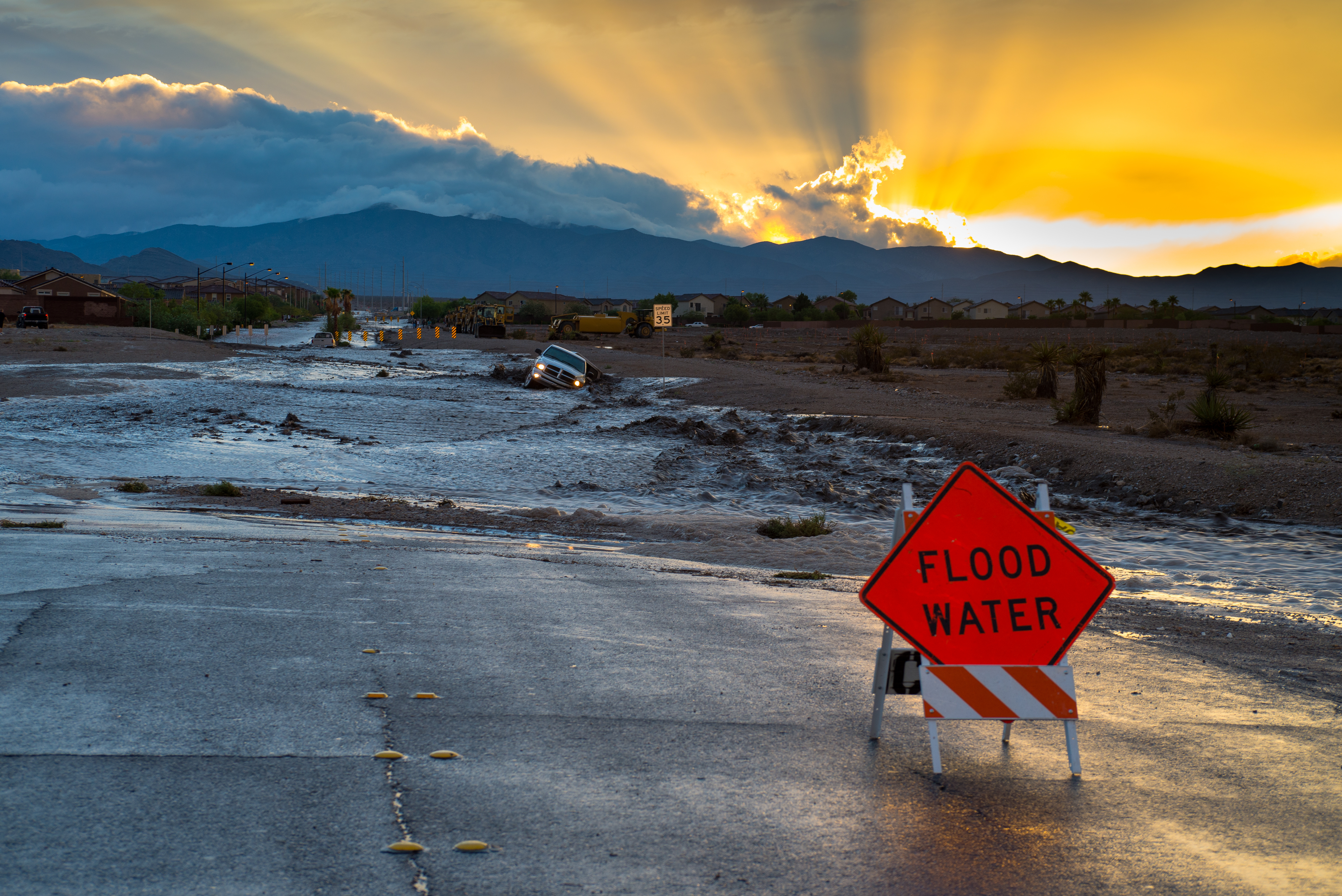
With the recent storms and flooding that have occurred this spring, drivers of any type of vehicle need to know that road conditions can change rapidly with flash floods. Each year, more deaths occur due to flooding than from any other thunderstorm-related hazard. Why? The main reason is that people underestimate the force and power of water. Over half of all flood-related deaths each year occur with victims inside vehicles. Many of these deaths occur when vehicles are swept downstream. Of these drownings, many are preventable, but too many people continue to drive around barriers that warn that the road is flooded. Even when operating a large commercial motor vehicle, you can be swept away by the strong force of the water’s current.
I vividly remember watching several years ago a cement mixer that had been caught in a stormwater canal in Los Angeles during a flash flood be swept down the canal as if it were a toy boat.
To check weather conditions and flooding, visit the National Weather Service website at: www.weather.gov.
Whether you are driving or walking, if you come to a flooded road, Turn Around Don’t Drown. You will not know the depth of the water, nor will you know the condition of the road beneath it.
• If flooding occurs, get to higher ground. Get out of areas subject to flooding. This includes dips, low spots, canyons, washes, etc.
• Avoid areas that are already flooded, especially if the water is flowing fast. Do not attempt to cross flowing streams. Turn Around Don’t Drown.
• Roadbeds may be washed out under floodwaters. NEVER drive through flooded roadways. Turn Around Don’t Drown. If your vehicle is suddenly caught in rising water, leave it immediately and seek higher ground.
• Don’t park your vehicle along streams and washes, particularly during threatening conditions.
• Be especially cautious at night when it is harder to recognize flood dangers.
• Avoid low water crossings.
• Use alternate routes to avoid flood-prone areas.
• Leave your vehicle immediately if it stalls in floodwaters.
• Move to higher ground if you can do so safely.
• Most cars and light trucks will begin to float in as little as 1 to 2 feet of water.
Safe Driving Tips for Springtime Weather Conditions
Tornado
Do not drive during tornado conditions.
Never try to outdrive a tornado in a vehicle. Tornadoes can change direction quickly and can lift a car or truck and toss it through the air.
Get out of your vehicle immediately and seek shelter in a nearby building.
If there is no time to get indoors, or if there is no nearby shelter, get out of the car and lie in a ditch or a low-lying area away from the vehicle. Overpasses can also be places of refuge; however, be aware of the potential for flooding.
Severe Thunderstorms and Lightning
Tune in to your radio to stay informed of approaching storms.
If you see a tornado or hear a tornado warning, don’t try to outrun it. Follow tornado driving safety tips.
Turn on your headlights (low beams) and slow down. Many states require the use of headlights during rain.
Allow extra distance for braking.
Do not drive unless necessary.
Pull safely onto the shoulder of the road, away from any trees that could fall on the vehicle.
Stay in the car and turn on the emergency flashers until the heavy rain subsides.
An automobile provides better insulation against lightning than being in the open.
Avoid contact with any metal conducting surfaces, either inside or outside your car.
Avoid flooded roadways.
Avoid downed power lines.
Check your windshield wipers and tires regularly to ensure that they are ready for severe weather.
Approach intersections with caution.
Treat traffic lights at intersections as stop signs.
May is Motorcycle Safety Awareness Month
Motorist awareness is a key component of the National Highway Traffic Safety Administration’s motorcycle safety program. Over two-thirds of fatal

motorcycle crashes involve another vehicle. In many cases, the motorist does not see the motorcycle in time to avoid a crash.
It is important to recognize that driver actions directly impact motorcyclist safety. For example, a motorist may ignore road debris, but that same debris could be deadly for a motorcyclist.
International Roadcheck 2026: May 12–14
International Roadcheck is an annual three-day event during which CVSA-certified inspectors conduct compliance, enforcement, and educational initiatives focused on motor carrier, vehicle, and driver safety.
It is the largest targeted enforcement program for commercial motor vehicles in the world, with nearly 15 trucks and motorcoaches inspected every minute across North America during the 72-hour period.
Since its inception in 1988, more than 1.8 million roadside inspections have been conducted during International Roadcheck. This event also provides an opportunity to educate the industry and the public on the importance of safe commercial motor vehicle operations and the roadside inspection program.
CVSA sponsors International Roadcheck in partnership with the Federal Motor Carrier Safety Administration, Pipeline and Hazardous Materials Safety Administration, Canadian Council of Motor Transport Administrators, Transport Canada, and Mexico’s Ministry of Infrastructure, Communications, and Transportation.


