


Monday, September 21st, is the first day of fall, and now is the time to start preparing your operation for the cold weather ahead.
Your drivers should be aware of what is required to keep their trucks running properly during the winter months.
Fuel Additive Use During Cold Weather Conditions
Fuel additives designed to prevent gelling should be added anytime the ambient temperature is below 32°F. Power Service and Penray are popular manufacturers of fuel additives, and both companies offer different products available through Navistar and Idealease locations.
Power Service
Power Service 911 – “Red Bottle”
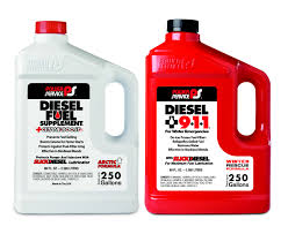
Power Service 911 is to be used ONLY when the fuel in a unit has already gelled.
Power Service 911 is NOT intended to be used as a regular fuel additive to prevent fuel from gelling.
Power Service Diesel Fuel Supplement + Cetane – “White Bottle”
Power Service Diesel Fuel Supplement + Cetane should be added to the fuel at each fill-up when the ambient temperature is below 30°F.
This is the additive that should be used on a regular basis during the winter months.
Penray
Winter Thaw Emergency Diesel Fuel Supplement
Winter Thaw dissolves already-gelled fuel quickly and reduces clogging of fuel filters. It helps prevent ice crystal buildup in fuel lines and filters by dispersing moisture.
It helps eliminate hard starting, pounding, and excessive smoking while improving combustion. It is 100% compatible with low-sulfur fuel and fuel blends.
Winter Pow-R Plus Diesel Fuel Supplement
Winter Pow-R Plus is ULSD compliant and helps prevent diesel fuel from gelling and ice crystals from forming. It reduces the cold filter plugging point by as much as 30°F and helps enhance cetane and improve fuel economy.
It utilizes HAFI® technology, improves cold-weather starting, helps stabilize fuel and prevent corrosion, reduces emissions, and improves lubricity.
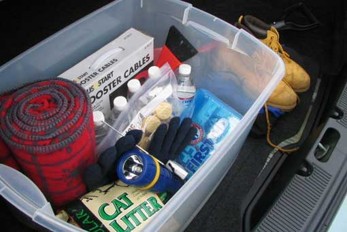
How to Make a Cold Weather Survival Kit
Everyone should carry a winter survival kit in their truck. In an emergency, it could save your life.
Here is what you should include:
-
A shovel
-
Windshield scraper and small broom
-
Flashlight with extra batteries
-
Battery-powered radio
-
Water
-
Snack foods, including energy bars
-
Raisins and mini candy bars
-
Matches and small candles
-
Disposable hand and foot warmers
-
Extra hats, socks, and mittens
-
First-aid kit with a pocketknife
-
Necessary medications
-
Blankets or a sleeping bag
-
Tow chain or rope
-
Road salt, sand, or cat litter for traction
-
Booster cables
-
Fluorescent distress flag and whistle to attract attention
-
Cell phone adapter that plugs into the vehicle’s power outlet and/or an extra battery supply
Driving a Truck Is a Dangerous Job!
When you think of dangerous jobs, what comes to mind? Police officers, firefighters, and construction workers might top the list for most people. Tractor-trailer truck drivers probably do not immediately come to mind, but Bureau of Labor Statistics data show that driving a truck can be risky in ways you might not expect.
For example:
-
One out of every seven American workers killed on the job is a tractor-trailer truck driver.
-
In 2022, 934 tractor-trailer truck drivers were killed while working.
-
Many of these deaths—80 percent—were caused by transportation incidents.
Heavy and tractor-trailer truck drivers also have the highest number of nonfatal injuries and illnesses requiring days away from work across all occupations. They rank sixth among occupations with the highest incidence rates of nonfatal occupational injuries and illnesses involving days away from work, following police officers and sheriffs, firefighters, highway maintenance workers, correctional officers, and nursing assistants.
Another way to look at this statistic is that truck drivers accounted for nearly one out of every 20 injury and illness cases nationwide that required time away from work to recover.
In fact, tractor-trailer truck drivers are three times more likely than the typical American worker to experience an injury or illness that requires days away from work.
The injuries most likely to cause truck drivers to miss work result from slips, trips, and falls, followed by overexertion. How do workers driving tractor-trailer trucks overexert themselves? Pushing and pulling containers, lifting heavy items while loading and unloading trucks, and routinely getting in and out of such large vehicles are all ways drivers can easily overexert themselves on the job.
Among all occupations, tractor-trailer truck drivers also ranked No. 3 on the list of workers suffering from musculoskeletal disorders—injuries or disorders of the muscles, nerves, tendons, joints, cartilage, or spinal discs—that required days away from work in 2014.
Overexertion, including repeatedly getting in and out of the truck and assisting with loading and unloading, as well as prolonged sitting and maintaining the same position—sometimes with poor posture—while driving can all contribute to these injuries.
When truck drivers are injured on the job, they may also take longer to recover. Half of all truck drivers required at least 20 days away from work after an incident before returning, compared with workers across all other occupations, where half returned to work within nine days.
Among tractor-trailer truck drivers who had to take days off due to an injury, 42 percent missed more than a month—31 or more days—of work.
The U.S. Department of Transportation’s Federal Motor Carrier Safety Administration (FMCSA) is charged with reducing the number and severity of crashes involving large commercial trucks and buses on our nation’s public highways and roads.
In addition to its regulatory oversight of commercial motor carriers, FMCSA provides online resources to help everyone share our roadways safely. FMCSA’s safety education program for motorists, commercial vehicle drivers, bicyclists, and pedestrians is called Our Roads, Our Responsibility.
More information about preventing musculoskeletal disorders in the workplace is available from the Occupational Safety and Health Administration (OSHA). Data about work-related fatalities, injuries, and illnesses can be found on the Bureau of Labor Statistics website.
We hope this detailed information will help employers improve working conditions for tractor-trailer drivers while empowering drivers with greater knowledge about the hazards they may encounter on the job.
If you have questions or need additional information about this data, please contact the Bureau of Labor Statistics.
Sean Smith and Patrick Harris are economists at the Bureau of Labor Statistics. BLS employees Nicole Nestoriak and Erin Huband also contributed to this post.


