


National Fire Prevention Week is coming, and it is a good time to review with your drivers how to prevent fires and how to react if a fire occurs in their commercial motor vehicle.
Fire extinguisher inspection is a vital part of a driver’s daily vehicle inspection process. It amazes me how many times I will be looking at a truck and find that the fire extinguisher has lost pressure due to a leak, or that it was used and returned to the truck without being recharged.
The actions of a driver at the time of a fire are crucial to saving lives and controlling the amount of damage.
When a fire occurs in a commercial motor vehicle, the driver must know two things:
-
Basic knowledge about fires.
-
How to properly operate a fire extinguisher.
Fire safety and fire extinguisher operation should be part of every new driver’s orientation program.
The Federal Motor Carrier Safety Regulations require that all commercial motor vehicles have a fire extinguisher on board that is the correct size and type and is properly secured and labeled. Did you know that a CMV transporting hazardous materials may be required to have a different size extinguisher than one not carrying hazardous materials?
Here are the requirements:
§393.95 Emergency equipment on all power units
Each truck, truck tractor, and bus (except those towed in driveaway-towaway operations) must be equipped as follows:
(a) Fire Extinguishers
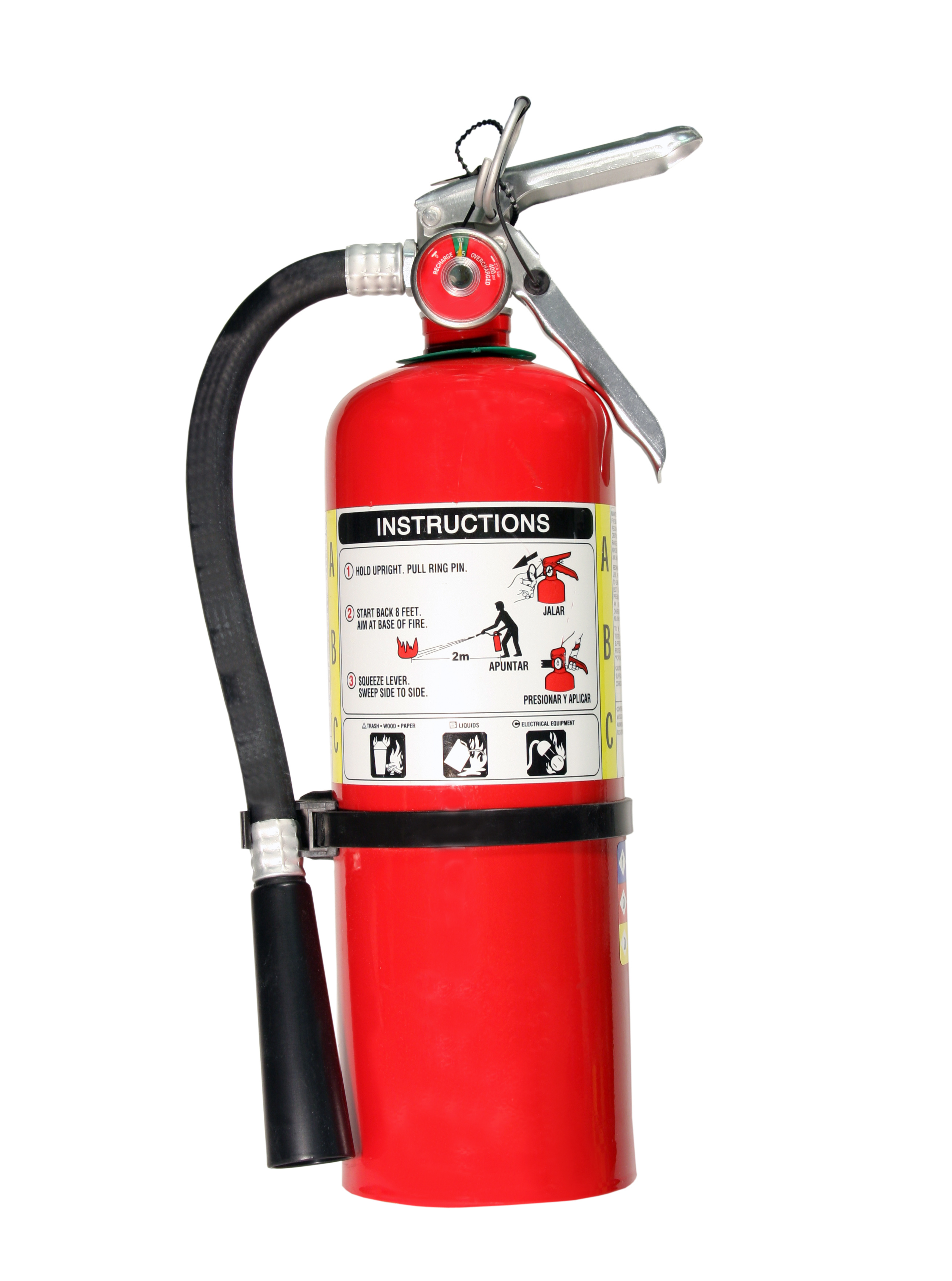
(a)(1) Minimum ratings:
A power unit that is used to transport hazardous materials in a quantity that requires placarding must be equipped with a fire extinguisher having an Underwriters’ Laboratories rating of 10 B or more.
A power unit that is not used to transport hazardous materials must be equipped with a fire extinguisher having an Underwriters’ Laboratories rating of 5 B or more.
Labeling and marking: Each fire extinguisher required by this section must be labeled or marked by the manufacturer with its Underwriters’ Laboratories rating.
Visual indicators: The fire extinguisher must be designed, constructed, and maintained to permit visual determination of whether it is fully charged.
Condition, location, and mounting: The fire extinguisher(s) must be filled and located so that they are readily accessible for use. The extinguisher(s) must be securely mounted to prevent sliding, rolling, or vertical movement relative to the motor vehicle.
When a Fire Occurs in a Commercial Motor Vehicle
The driver should take the following actions:
-
Get the truck off the roadway and into an open area, if possible. Park away from buildings, trees, vehicles, or anything else that may catch fire.
-
Call 911 to report the fire and provide your location.
-
If the fire has already grown to a size that cannot be safely extinguished, get away from the truck. Your life and the lives of the public are your first responsibility.
-
If you are operating a tractor-trailer and can safely disconnect the trailer from the tractor, do so to help prevent damage to both units and the cargo.
-
If the engine is on fire, turn off the engine as soon as possible.
-
Do not open the hood if possible. Try to extinguish the fire through the louvers, radiator, or underside of the truck. Opening the hood provides additional oxygen to the fire and may cause it to spread more rapidly.
-
If the fire is in your trailer or the cargo box of the truck, keep the doors shut. Again, additional oxygen can increase the intensity of the fire.
-
A tire fire will not likely be extinguished with a standard fire extinguisher. If it is safe to do so, dirt or sand may help smother the fire.
Preventing Fires in Your Commercial Motor Vehicle
You can help reduce the likelihood of a fire starting in your commercial motor vehicle by taking the following precautions:
-
Complete a thorough pre-trip and post-trip inspection each day, paying close attention to the fuel, electrical, and exhaust systems, as well as the tires and cargo.
-
Keep the unit clean and free from excess grease, fuel, and oil.
-
Monitor your dashboard gauges while operating the vehicle for signs of overheating.
-
Use your mirrors to watch for signs of smoke or flames.
-
With post-emission 2007 and newer units, be aware of the regeneration process of the after-treatment system and where regeneration occurs, as exhaust temperatures can reach extremely high levels.
-
Know the cargo you have on board and understand its potential fire hazards.
Preventing Driver Injuries in Fall and Winter
Slip, trip, and fall injuries are among the most common types of injuries for drivers, and many occur during the winter months. Each year, thousands of professional drivers are seriously injured because of hazardous winter conditions. Working in ice and snow requires your full attention and awareness.
-
Remember, our primary goal is for you to go home to your family and friends the same way you came to work today: safe and healthy.
-
Always wear proper footwear. Wear a full-support leather shoe or boot with a rugged, non-slip sole. Consider using non-slip traction covers, such as Yaktrax.
-
SLOW DOWN. Never be in a hurry.
-
Always watch where you are walking. Snow can accumulate on top of ice in and around truck parking areas.
-
Take small steps and check your footing with each step.
-
Check all handrails and handholds for ice before using them.
-
Always wear gloves for a better grip.
-
Always use three points of contact when entering or exiting your tractor or trailer, or when getting onto the catwalk behind the cab.

-
Always wear your seat belt.
-
SLOW DOWN!
-
Take your time and use extra caution throughout the winter season.


