


Spring will arrive on Thursday, March 20, in the U.S., bringing along a slew of seasonal allergies. Experts suggest that the 2026 allergy season could be more severe compared to previous years.
With allergy season officially starting, you should be aware that some over-the-counter allergy medications can seriously impair your ability to drive a Commercial Motor Vehicle (CMV).
University of Iowa researchers who tested allergy sufferers in a driving simulator found that the antihistamine diphenhydramine (found in many allergy and cold medications) significantly impaired a driver’s ability to follow, steer, and maintain the correct lane. The study showed that diphenhydramine has a more significant impact on driving performance than alcohol.
Researchers said that of the 39 million Americans who suffer from hay fever and allergies, only 4.8 million take prescription medications. The remainder go without treatment or take over-the-counter medications. These medications may be effective, but they often come with warnings stating that drowsiness may occur and to use caution when driving a motor vehicle or operating machinery.
Researchers say that even if you do not feel drowsy while taking allergy medications, you can still be impaired.
When drivers take over-the-counter medications, they often forget that these drugs affect their cognitive and motor abilities. It does not usually cross their minds that they are taking a drug that may impair them. Even if they read the warning, it is common to assume that it applies only to certain

people and that “do not operate heavy machinery” means farm equipment or tractors, forgetting that CMVs should be included as well. Additionally, many drugs carry warnings about drowsiness or dizziness that people ignore. However, this is a serious problem that leads to thousands of vehicle crashes each year.
The danger of getting behind the wheel of a CMV when a driver is too tired or impaired to drive can be fatal. Drugs impair our bodies in a variety of ways. They may blur vision; cause drowsiness or overstimulation; alter depth perception; cause hallucinations; raise or lower blood pressure; or slow or accelerate reaction time. They can interfere with concentration and decision-making. These problems can result from taking any type of drug—illegal, prescription, or over-the-counter. When brain function is altered, muscle and nerve function change as well.
Antihistamines—which block allergic reactions—slow reaction time and impair coordination. Over-the-counter decongestants can cause drowsiness, anxiety, and dizziness. Drowsy driving is responsible for an estimated 100,000 traffic crashes and about 1,500 deaths every year, according to the National Highway Traffic Safety Administration (NHTSA).
Common prescription drugs (including medications used to treat allergies, pain, diabetes, high blood pressure, cholesterol, ulcers, depression, anxiety disorders, and insomnia) can cause drowsiness and affect vision and other skills that can create serious hazards on the road.
Tranquilizers, sedatives, and sleeping pills slow down the central nervous system, causing drowsiness, diminished reaction time, and impaired concentration.
Over-the-counter drugs such as cold and cough medicines, antihistamines, medications to prevent nausea or motion sickness, pain relievers, decongestants, and diuretics can cause drowsiness or dizziness that may impair a driver’s skills and reflexes.
Some drugs may make you feel alert and confident in your driving. In reality, the situation may be quite different. Drugs can give you a false sense of control when you are, in fact, impaired.
Below is a partial list of legal drugs that can, in certain amounts, impair your ability to drive:
• Anti-anxiety medications
• Amphetamines
• Barbiturates

• Stimulants
• Narcotic pain medications
• Allergy medicines
• Blood sugar medications
• Antidepressants
• Tranquilizers
• Blood pressure medications
• Motion sickness medication
• Ulcer medication
• Antibiotics
• Anti-seizure medications
• Paregoric
• Anti-nausea medications
• Sedatives
• Cough syrups
• Alcohol-containing medications
• Caffeine-containing medications
• Decongestants
To avoid harming yourself or others, partner with your physician and pharmacist to learn about your medication’s side effects and which drugs are safe to combine—especially when driving. Never take more than the prescribed dose or take someone else’s medication. Ask about non-sedating alternatives if you are a professional driver. Allow your body time to adjust to new medications before driving. Most importantly, each of us is responsible for recognizing the signs and symptoms of drug impairment before getting behind the wheel of any vehicle.
For more information, including drug side effects, visit:
www.drugs.com
Please see the following FAQs from the Federal Motor Carrier Safety Administration (FMCSA):
What medications disqualify a CMV driver?
http://www.fmcsa.dot.gov/faq/what-medications-disqualify-cmv-driver
Can a CMV driver be disqualified for using a legally prescribed drug?
http://www.fmcsa.dot.gov/faq/can-cmv-driver-be-disqualified-using-legally-prescribed-drug
You can access 21 CFR 1308.11 (Controlled Substance Schedule I) at:
http://www.ecfr.gov/cgi-bin/text-idx?SID=fb0b4afcff84aef52755d6dff7b8880d&node=se21.9.1308_111&rgn=div8
For further assistance, contact the FMCSA’s Physical Qualifications Division at fmcsamedical@fmcsa.dot.gov or (202) 366-4001.
The Big 12
With March Madness just around the corner, the “Big 12” referenced here has nothing to do with basketball. Instead, it refers to the top 12 driver violations that an FMCSA investigator looks for during a carrier investigation.
During investigations, safety investigators review driver histories for the most serious violations of FMCSA regulations. They examine 12 so-called

“Red Flag Violations,” also known as “The Big 12.” According to FMCSA, investigators always review these 12 items to determine whether issues
have been corrected.
There are currently 12 Red Flag Violations, although FMCSA states that the list may change at any time.
The table below details them, along with the applicable BASIC and regulation.
| Basic | FMCSR Part | Violation Description |
|
Driver Fitness |
383.21 | Operating a commercial motor vehicle (CMV) with |
| Driver Fitness | 383.23(a)(2) | Operating a CMV without a valid commercial driver's license (CDL) |
| Driver Fitness | 383.51(a) | Driving a CMV (CDL) while disqualified |
| Driver Fitness | 383.91(a) | Operating a CMV with improper CDL group |
| Driver Fitness | 391.11 | Unqualified driver |
| Driver Fitness | 391.11(b)(5) | Driver lacking valid license for type of vehicle being operated |
| Driver Fitness | 391.11(b)(7) | Driver disqualified from operating CMV |
| Driver Fitness | 391.15(a) | Driving a CMV while disqualified |
| Controlled Substances/Alcohol | 392.4(a) | Driver uses or is in possession of drugs |
| Controlled Substances/Alcohol | 392.5(a) | Possession/use/under influence of alcohol less than 4 hours prior to duty |
| Fatigued Driving (HOS) | 395.13(d) | Driving after being declared out-of-service (OOS) |
| Vehicle Maintenance | 396.9(c)(2) | Operating an OOS vehicle |
Frost Laws in 16 States and 9 Provinces
Spring weather often creates driving challenges. Specifically, changes in ground temperature can damage roads and vehicles and result in “roller coaster” rides caused by “wavy roads.”
Motor carriers must monitor state and provincial spring weight restrictions to avoid damage to roadways and equipment.
Be ready for an alternate route.

To preserve roadway integrity, many states impose seasonal weight restrictions as early as late February, with some lasting into May.
As drivers travel through regions experiencing spring thaws, they must watch for posted signs indicating allowable weights. Signs may also indicate reduced speed limits.
Trip planning may require visiting state websites to determine whether specific highways are accessible. If a driver encounters a weight restriction, he or she must find an alternative route, possibly contacting dispatch for assistance.
Ignoring posted restrictions may result in more than fines. It may cause damage to roads, vehicles, and cargo, and could lead to accidents if roadways become difficult to navigate.
To view frost laws by state and province, visit:
https://oversize.io/regulations/frost-laws-by-state
Daylight Saving Time Begins Sunday, March 8
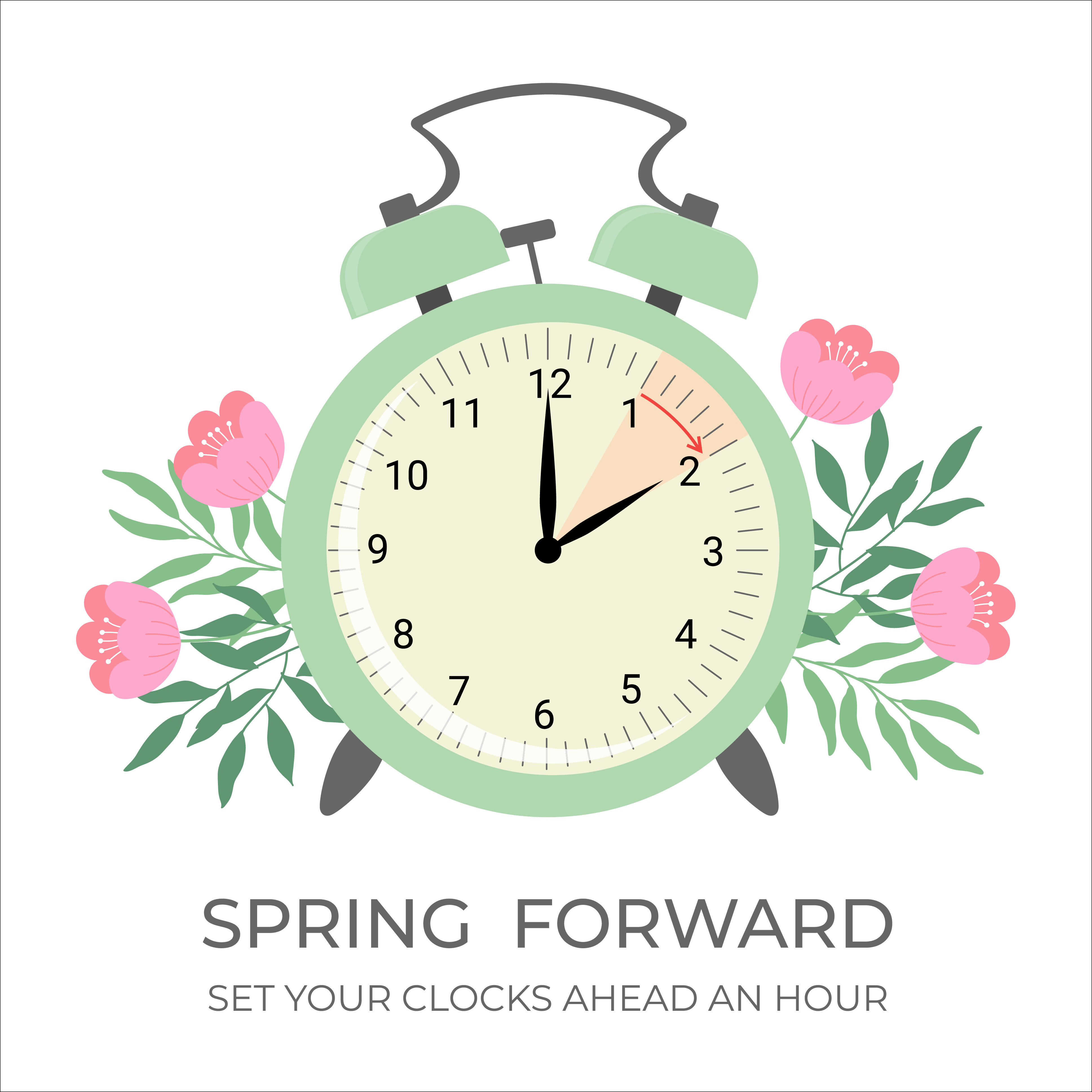
Daylight saving time will begin in 2026 on Sunday, March 8, at 2 a.m. local time, when clocks move forward one hour.
• Begin notifying drivers now about the time change.
• Remind route drivers that daylight hours will shift according to their stops.
• Remember to change batteries in smoke alarms and carbon monoxide detectors.
Most sleep experts recommend a minimum of seven hours of sleep per night. Many people sleep an average of 40 minutes less on the Sunday night following the time change. Plan ahead to avoid fatigue. Consider sleeping in Sunday morning or taking a nap Sunday afternoon.
Not all states observe daylight saving time. Hawaii and Arizona (except for the Navajo Nation) do not observe daylight saving time. The territories of American Samoa, Guam, the Northern Mariana Islands, Puerto Rico, and the U.S. Virgin Islands also do not observe it.
International Roadcheck: May 12–14, 2026
International Roadcheck is an annual three-day event during which CVSA-certified inspectors conduct compliance, enforcement, and educational initiatives focused on motor carrier, vehicle, and driver safety.
International Roadcheck is the largest targeted enforcement program on commercial motor vehicles in the world, with nearly 15 trucks and motorcoaches inspected, on average, every minute across North America during a 72-hour period.
Since its inception in 1988, more than 1.8 million roadside inspections have been conducted during International Roadcheck. The event also provides an opportunity to educate the industry and the public about the importance of safe commercial motor vehicle operations and the roadside inspection program.
CVSA sponsors International Roadcheck with participation from the Federal Motor Carrier Safety Administration, the Pipeline and Hazardous Materials Safety Administration, the Canadian Council of Motor Transport Administrators, Transport Canada, and Mexico’s Ministry of Infrastructure, Communications and Transportation.


